
Don't Let December Spending Become January Stress
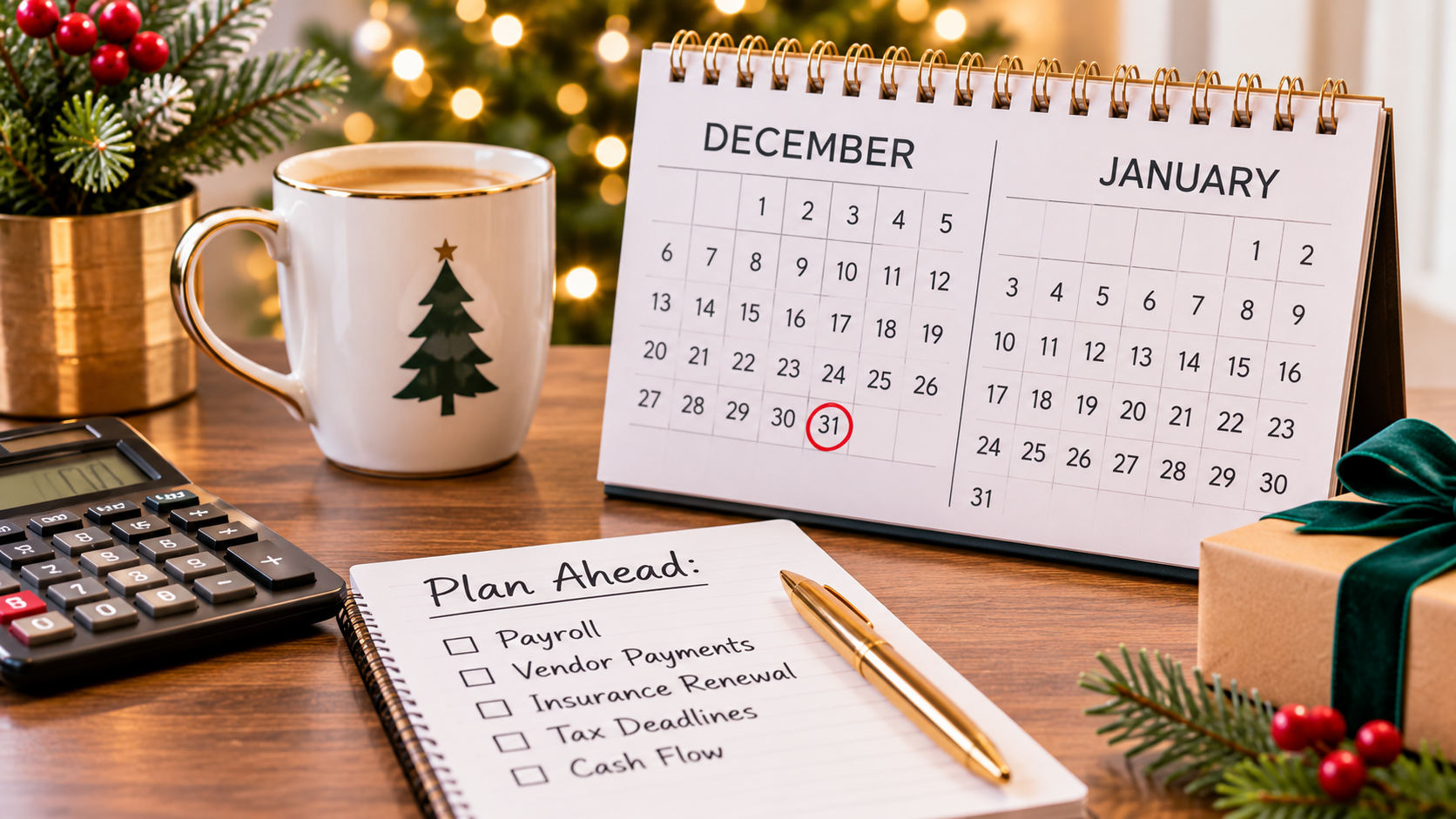
Don't Let December Spending Become January Stress
Make smarter year-end spending decisions today so your business can start the new year on stronger financial footing.
December is often filled with celebrations, employee appreciation, last-minute purchases, and preparations for the new year.
But while you're focused on finishing the year strong, it's important not to lose sight of what's waiting on the other side of December 31.
January often brings a fresh set of financial obligations, including payroll, vendor payments, insurance renewals, and upcoming tax deadlines.
Without proper planning, even a profitable business can find itself struggling to cover expenses once the holidays are over.
The financial decisions you make in December can set the tone for the entire first quarter.
Here are five ways to protect your cash flow and prepare your business for a financially healthy start to the new year.
1. Know Where Your Cash Stands Before Year-End
Before committing to additional holiday expenses or major purchases, take a closer look at your current financial position.
Your bank account balance provides a snapshot of what you have today, but it doesn't necessarily tell you how much money is available to spend.
Some of that cash may already be needed for outstanding bills, upcoming payroll, or other financial commitments.
Start by reviewing:
- Current cash balances.
- Outstanding customer invoices.
- Remaining December expenses.
- Upcoming debt payments.
- Anticipated revenue before year-end.
- Any additional holiday-related expenses.
Understanding these numbers can help you determine how much cash you realistically expect to have when the new year begins.
Your CFO Tip: Don't confuse cash in the bank with cash available to spend. Account for existing financial commitments before making additional purchases.
2. Identify the Expenses Waiting for You in January
The beginning of a new year can bring expenses that are easy to overlook during the holiday season.
In addition to your regular operating costs, January may include annual renewals, tax payments, and other financial obligations that don't occur every month.
Common January expenses include:
- Employee payroll and payroll taxes.
- Vendor and supplier payments.
- Business insurance renewals.
- Annual software subscriptions and memberships.
- Rent, utilities, and operating expenses.
- Loan and equipment payments.
- Applicable estimated tax payments.
- Year-end accounting and tax preparation costs.
Create a list of anticipated expenses and identify when each payment is due.
Having this information available before December ends can help you avoid unexpected financial pressure.
Your CFO Tip: Review your expenses from the previous January to identify annual or seasonal costs you may have forgotten.
3. Create a Simple January Cash Flow Forecast
You don't need a complicated financial model to start planning for January.
A basic cash flow forecast can help you understand how much money your business expects to have available after covering its upcoming obligations.
What Does This Look Like?
Imagine your business expects to have the following financial position:
Cash Flow ItemAmountExpected December 31 cash balance$50,000Anticipated January customer payments+$20,000Payroll and payroll taxes-$25,000Vendor payments-$12,000Insurance renewals-$5,000Other operating expenses-$8,000Projected January ending cash balance$20,000
At first glance, a $50,000 year-end cash balance might make your business feel comfortable making additional purchases.
However, after accounting for anticipated income and expenses, your projected January ending balance is only $20,000.
And if customer payments arrive later than expected, your available cash could be even lower.
This is why looking ahead matters.
Your CFO Tip: Create both an expected and conservative cash flow forecast. Consider what would happen if customer payments were delayed or unexpected expenses occurred.
4. Think Twice About Last-Minute December Spending
Year-end purchases, employee bonuses, holiday celebrations, and potential tax deductions can make December an especially expensive month.
While many of these expenses may be worthwhile, it's important to evaluate their timing and overall financial impact.
Before approving additional spending, ask yourself:
- Is this expense necessary right now?
- Could it wait until the new year?
- Will it reduce the cash available for January obligations?
- Does the purchase support our long-term business goals?
- Will we still have an adequate cash reserve afterward?
A purchase that makes sense today could create unnecessary challenges if it leaves your business short on cash next month.
Your CFO Tip: Establish a minimum cash reserve you want to maintain going into January. Use that amount as a guide when evaluating discretionary year-end spending.
5. Prepare for Potential Delays in Customer Payments
The holiday season can affect more than your expenses. It can also impact when your business receives money.
Customers may close their offices, delay invoice approvals, or postpone payments until after the holidays.
Meanwhile, your business still needs to meet its financial obligations.
Even a few delayed payments can create cash flow challenges if you've already committed your available funds elsewhere.
What can you do?
Review your accounts receivable before year-end and follow up on outstanding invoices.
Send invoices promptly, communicate payment expectations, and avoid relying too heavily on payments that haven't been received.
Your CFO Tip: When forecasting January cash flow, be realistic about when customers are likely to pay rather than assuming every outstanding invoice will be collected on time.
Your December-to-January Financial Checklist
Before closing out the year, take a few minutes to review the following:
- Estimate your December 31 cash balance.
- Identify outstanding year-end financial commitments.
- List anticipated January expenses and payment deadlines.
- Review outstanding customer invoices.
- Forecast expected January cash inflows and outflows.
- Establish a minimum cash reserve.
- Evaluate discretionary holiday spending and year-end purchases.
- Prepare for potential delays in customer payments.
- Begin developing your first-quarter financial plan.
A little preparation now can help prevent unnecessary financial stress when the new year begins.
Profitability and Cash Flow Aren't the Same Thing
One of the most important financial lessons for business owners is understanding the difference between being profitable and having enough available cash.
Your business may have experienced record sales or strong profits throughout the year, but if customers haven't paid their invoices or too much cash has been committed to expenses, you could still experience financial challenges.
That's why cash flow forecasting is such an important part of financial management.
It allows you to look beyond past performance and anticipate what your business will need in the weeks and months ahead.
Rather than reacting to financial challenges as they arise, you can make proactive decisions that help prevent them.
Give Your Business a Financial Head Start in 2027
Starting the new year with a clear financial picture is one of the best gifts you can give your business.
By understanding your available cash, anticipating upcoming expenses, and making thoughtful spending decisions, you can enter January with greater confidence and fewer financial surprises.
At Ladell CFO Services, we help business owners gain greater visibility into their finances, develop cash flow forecasts, and make informed decisions that support long-term financial stability.
Whether you're evaluating year-end spending, preparing for first-quarter expenses, or developing a financial strategy for 2027, our team is here to help.
Is Your Business Financially Ready for January?
Don't let December spending dictate how your business starts the new year.
Let's create a financial plan that helps you finish strong, protect your cash flow, and move into 2027 with confidence.